Cost factors

Flooring and Tile Cost Factors in Brevard County

Flooring prices depend on more than square footage. Material, removal, prep, room layout, transitions, wet-area details, and access all affect the final scope.

This page avoids fixed prices because a public site cannot know the slab, old flooring, material choice, or room conditions. Instead, it explains the factors that usually change a flooring or tile quote.

Concrete slab floor prep before tile or waterproof flooring installationPrep changes cost

Material choice

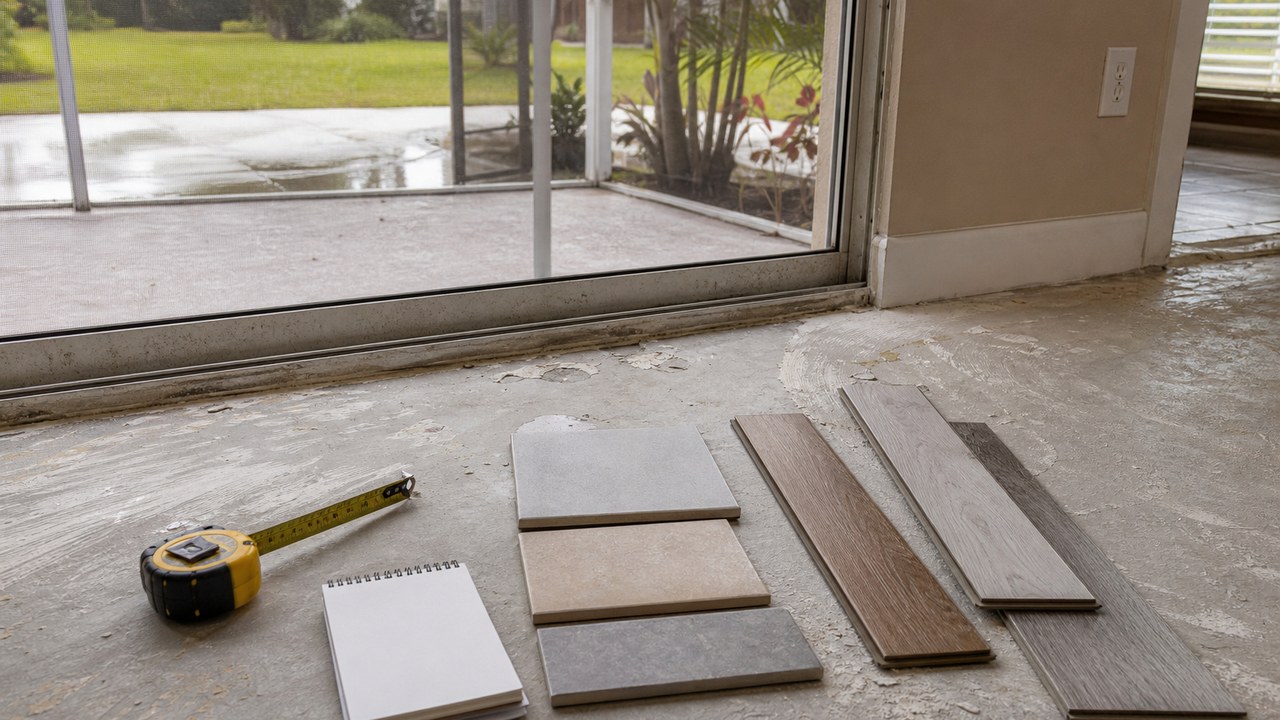
Porcelain tile, ceramic tile, large-format tile, plank tile, luxury vinyl plank, laminate, waterproof flooring, trim, underlayment, grout, and setting materials all change the cost. A simple material can still require careful labor. A premium material can become a problem if the floor is not ready for it. The quote should connect the material to the room and the surface underneath.

Removal and disposal

Removing old tile is very different from removing floating plank flooring. Tile demo can be dusty, loud, and labor-heavy. Thinset may need grinding or cleanup. Furniture, appliances, toilets, baseboards, and door trim can all affect preparation. Disposal and cleanup should be discussed early so the homeowner knows what the job includes.

Surface condition

A clean, flat, sound slab is easier to work with than a cracked, uneven, contaminated, or moisture-affected surface. Floor leveling, crack discussion, adhesive residue, hollow tile, and prior patchwork can change the scope. In Brevard County, slab-on-grade homes and coastal moisture make this part of the quote especially important.

Why square footage alone is not enough.

Two rooms with the same square footage can require very different flooring work. One may be an empty bedroom with old floating flooring that comes up quickly. Another may be a kitchen with tile under appliances, baseboards to manage, cracked grout, tight cabinet cuts, and a transition into a hallway. The finish material may be similar, but the labor and prep are not.

Bathroom and shower tile add another layer. Waterproofing, slope, drain location, niche layout, wall prep, trim, and glass or tub edges can all matter. A backsplash may be smaller, but outlets, cabinets, windows, and countertop edges can make the layout more detailed. Flooring cost factors are not meant to complicate the process. They help the quote reflect the real work instead of a guess.

Access also matters. A first-floor home in Palm Bay is not the same as a condo near Cocoa Beach with elevator rules and limited parking. A house in Viera with open rooms is not the same as an older Merritt Island home with tight hallways and multiple flooring layers. Good local copy should explain those differences because homeowners recognize them immediately.

Practical quote tip: Before calling, know the rooms involved, approximate size, current floor, preferred material if any, and whether furniture, appliances, bathroom fixtures, or old tile removal are part of the job. You do not need every answer. You just need enough detail for a useful first conversation.
Cost questions homeowners ask

Is tile more expensive than vinyl plank?

Often, but not always. Tile can involve more labor, setting materials, grout, and prep. Luxury vinyl plank may be faster in some rooms, but flatness, transitions, and product requirements still matter. The existing floor can change the comparison more than the new material alone.

Does old tile have to be removed?

Sometimes yes. It depends on height, bond, cracks, hollow areas, doors, transitions, and the new material. Installing over a bad surface can create a bad result. The quote should address what is safe and sensible for the specific floor.

Can flooring be done room by room?

Often, yes. Room-by-room work can help with budget and household disruption. Connected rooms, continuous plank direction, transitions, and material batches should be considered so the finished result still looks intentional.

Request a Flooring Estimate